
GOLDSWEAT
Events + Experience Design
Brand Strategy
Art Direction
Identity
Marketing & Promotion
Print Collateral
Talent Management
I came back from Japan with a broader sense of culture, sound, and design. Tokyo’s record stores, niche scenes, and appetite for newness made San Francisco feel comparatively narrow.
So rather than complain about it, I started something I wanted to go to. I built something new.
With a like-minded partner, a strong name, and no real roadmap, I went chasing that Tokyo feeling: a mythical place where exclusivity and acceptance meet late at night. Pretty quickly, Goldsweat evolved from a small club night into platform, a subculture, and a starling label.
It worked — reaching audiences in San Francisco, Atlanta, Baltimore, Minneapolis, and beyond. But in truth, we had no idea just valuable the brand we had built really was. We had no growth plan. We were doing everything by feel. And that made us vulnerable in ways I couldn’t anticipate — or cope with.



GOLDSWEAT #001 / 2007


NAIVELY NEW
Launching anything new in San Francisco required conviction. There was no social media tailwind, no guaranteed audience, and little patience for outsiders.
So we relied on what many early brands rely on: identity.
A memorable name. Distinct visual language. Consistent output. Word of mouth. What began as a party became something people recognized—and sought out.
But we never codified the mission. With a like-minded partner, it all felt understood.
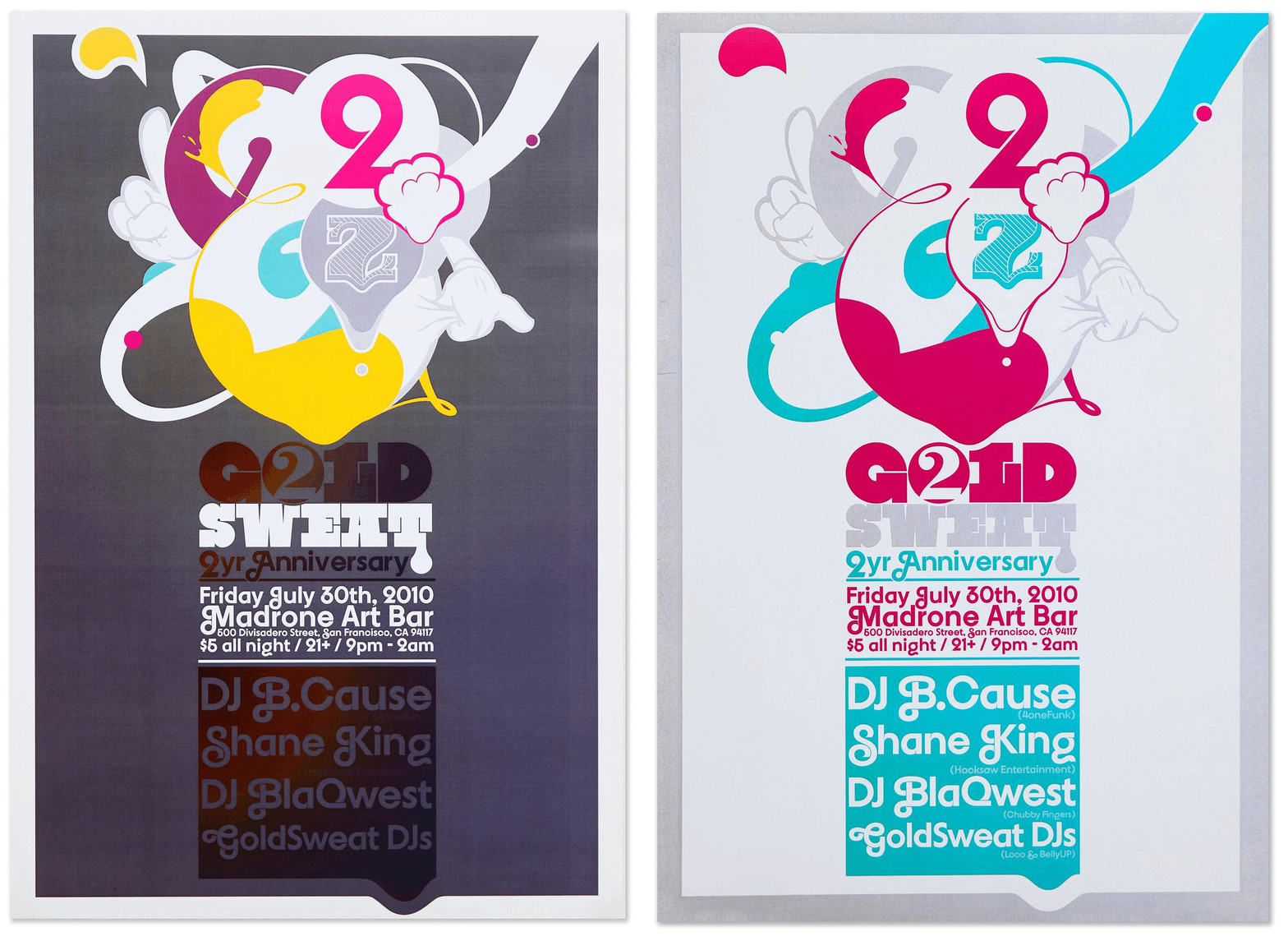


EARLY HEAT
In the beginning, not knowing how difficult the business truly was may have been an advantage.
We weren’t burdened by — and flagrantly ignored — market realities, margins, and conventional wisdom. We were focused on making posters, booking talent, filling rooms, and building something people wanted to be part of.
For a time, that mindset worked. Goldsweat became a staple event, expanded into new cities, and began evolving into a label of its own. We were even planning a compilation release. More cities.
But growth can turn a hobby into a job faster than founders expect. What helps something start is not always what helps it endure. As the operation became more complex, instinct needed to mature into structure. That transition never fully happened. So when friction arose, there was nothing solid to point to — no strategy. No spoken culture and values. Only assumed ones.
But the more interesting question now is not why Goldsweat ended. Its what failure revealed.


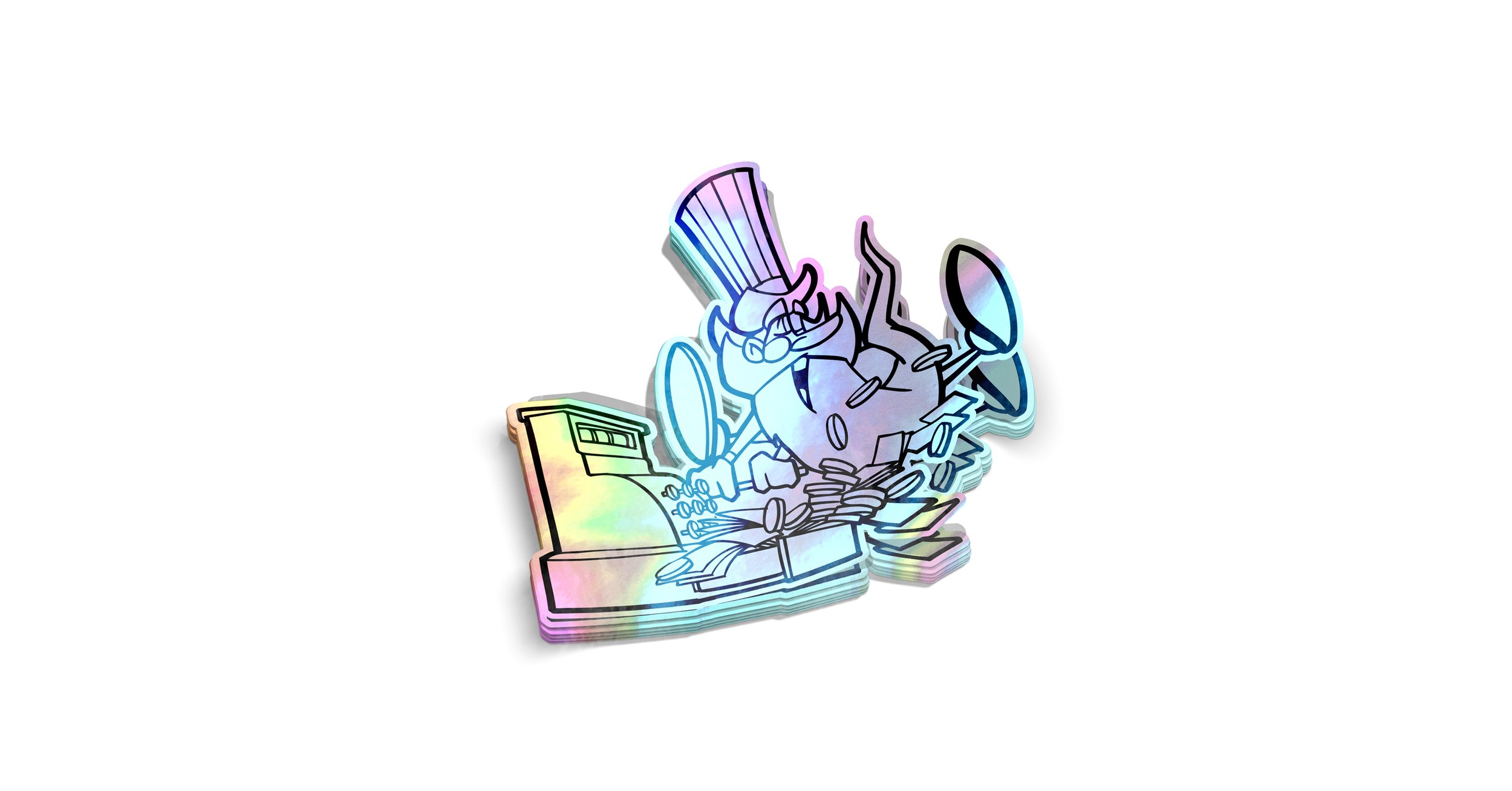
GOLDSWEAT / $5.00 SINCE 2007


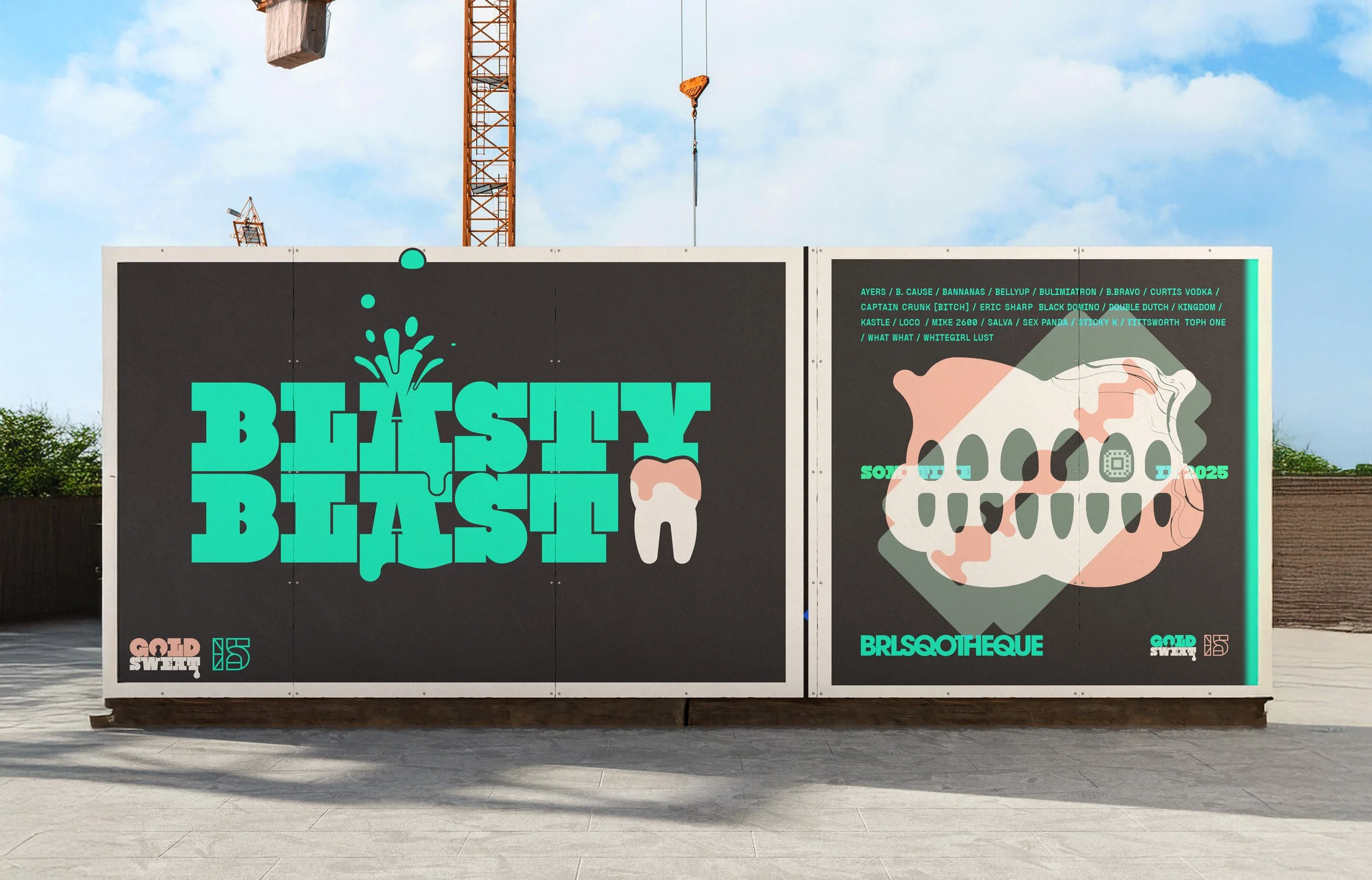


GS15 × BRLSQOTHEQUE: “THE PARTYIST”


GS-2.0: WHAT ENDURES
Could Goldsweat exist today? Not in the same form—and that is the entire point.
What began as a club night was always larger than the event itself. It was a feeling: discovery, irreverence, new design, new sounds, and people finding each other through taste. We wanted to be contrarian before that became the default posture.
A second life would begin with tangible things—prints, apparel, merchandise, curated releases—allowing the brand to live again before asking anyone to show up. If the energy proved real, the event could follow—but it would need to be scarce, intentional, and unmissable.
What I understand now is that brands do not need to repeat their past to honor it. They need to translate what mattered into the present. And what mattered most about Goldsweat was people.
The concepts above are explorations of what Goldsweat might have looked like today. In many ways, I think it is something people need now more than ever. If I had made more strategic decisions early on, it wouldn’t have just looked and sounded better—it would have been viable. It would have brought people a lot of joy.
That is a difficult cross to bear. But it has also strongly shaped the way I build things now.


NOTES ON FAILURE
Watching peer labels continue to evolve over the years brought a clear realization: Goldsweat did not end because opportunity disappeared. It ended because I still had more to learn about leadership.
As the company gained momentum, it naturally began to change. Instead of adapting with it, I became too attached to controlling what it had been. What began as conviction slowly hardened into rigidity.
That lesson has stayed with me.
I still believe in clear vision and strong standards. But I now understand the difference between leadership and control: one creates room for growth, the other constrains it.
That perspective has helped me navigate larger projects, more complex organizations, and higher-stakes decisions ever since.
I follow one simple rule: never become a failure-point.
Sometimes that means holding the line. More often, it means knowing when to step back, let others grow, and let the work prove itself instead of constantly fighting for it.
After all: “One of the symptoms of an approaching nervous breakdown is the belief that one’s work is terribly important.”
